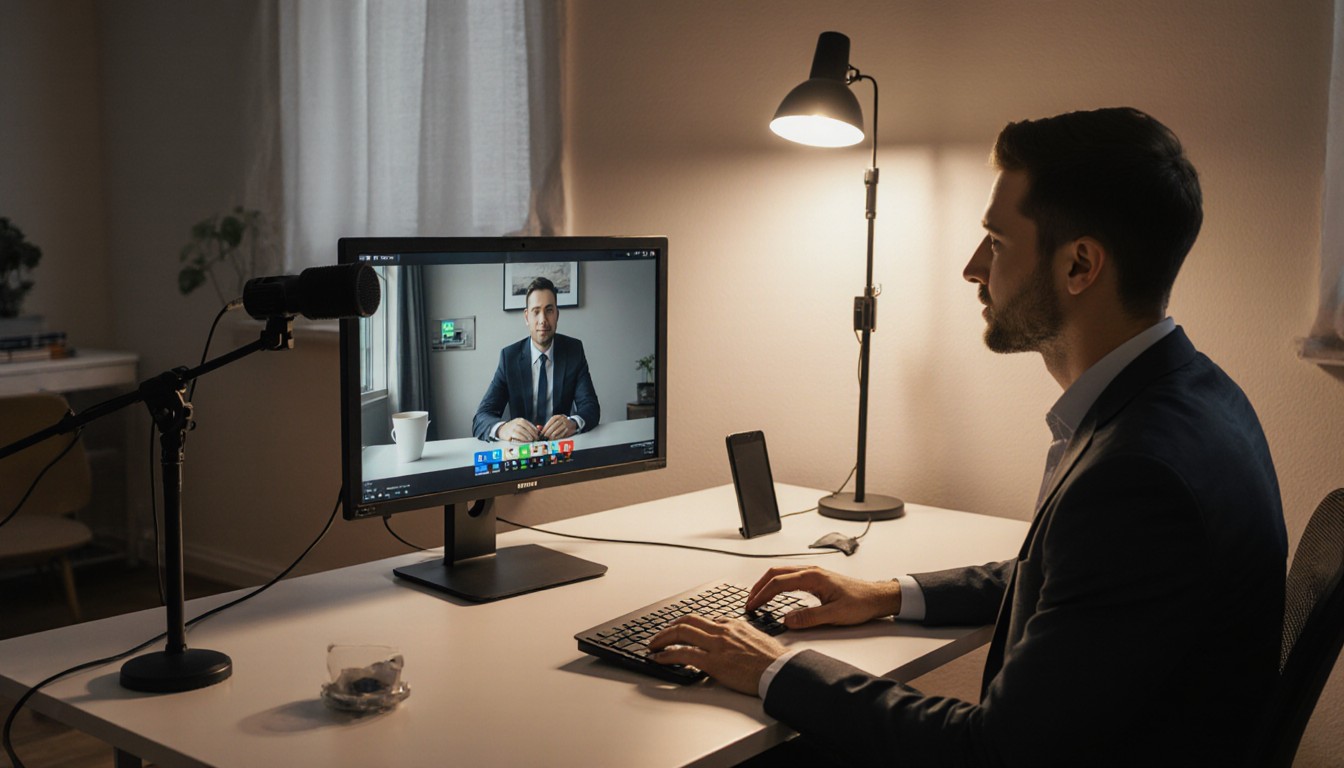
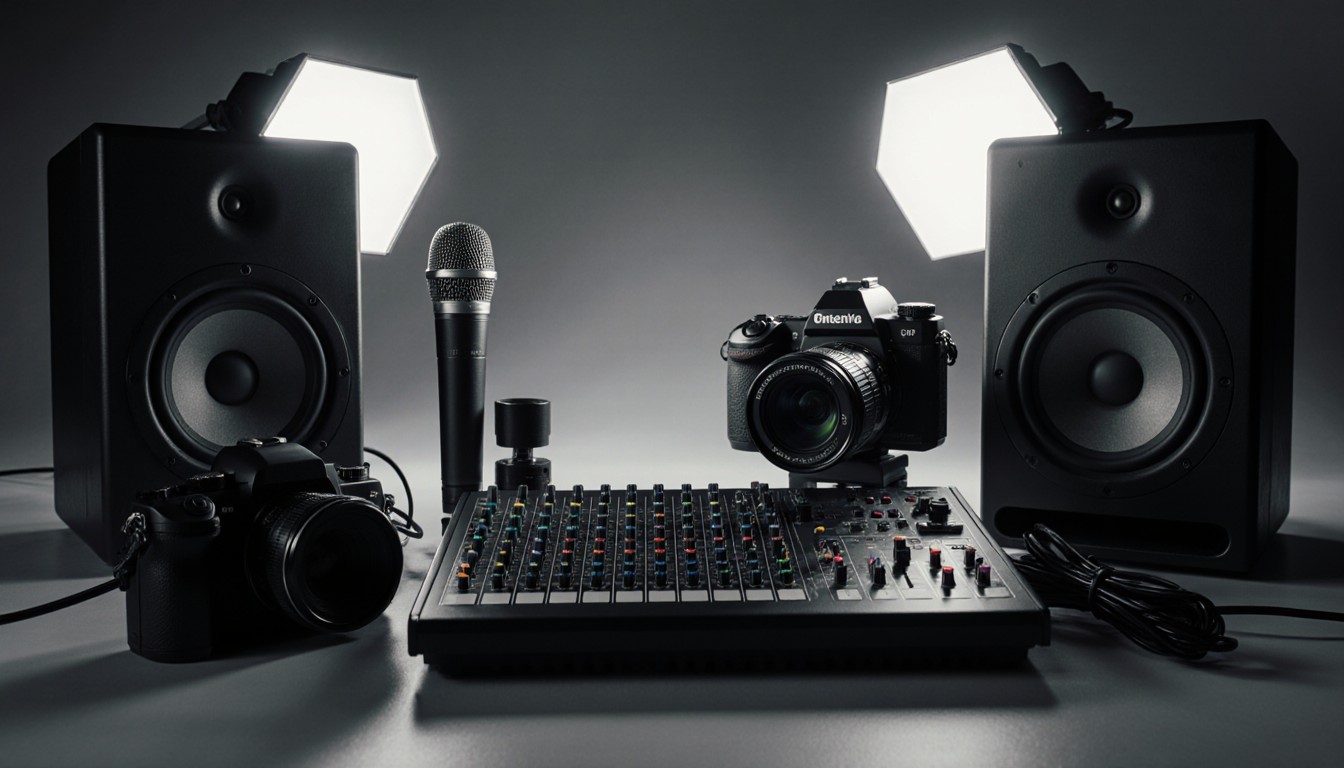
After two decades in this business, I've seen it all. The good, the bad, and the "why didn't anyone think to bring a microphone?" Here's the truth: you don't need a warehouse full of gear to run a great event. You need the right five things, done well.
These aren't the flashiest items. They're not going to wow anyone on an equipment list. But they're the difference between "that went smoothly" and "we'll never use that venue again." Let's break them down.
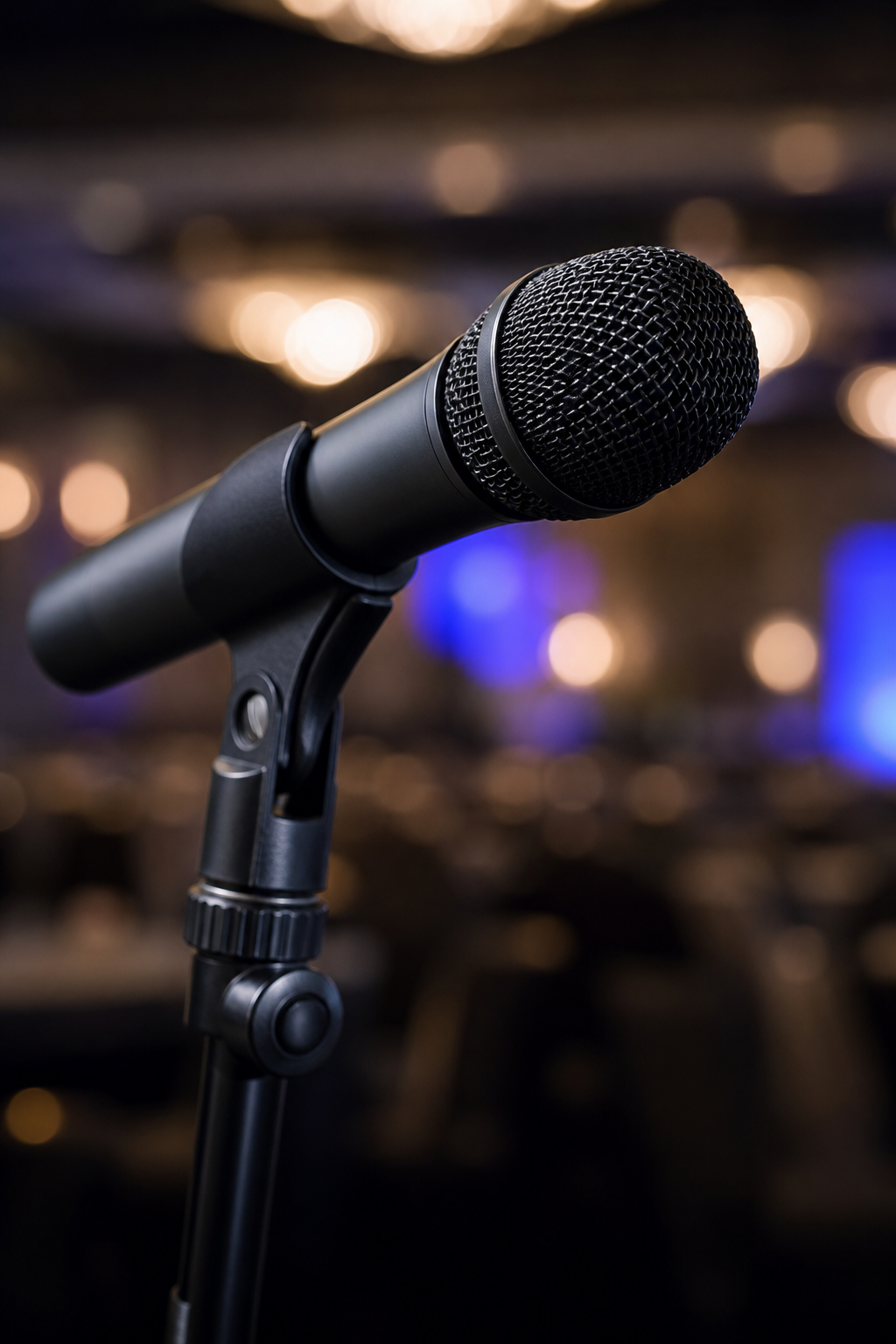
1. Professional Microphone System
If people can't hear you, nothing else matters. Not the lighting, not the video, not the fancy stage design. Audio is king. A bad microphone ruins everything. A good one? Nobody even thinks about it—they just hear your message clearly.

Why Microphones Are Essential:
- Speech Intelligibility: Ensures every word is heard clearly throughout the venue
- Professional Image: Shows attention to detail and guest experience
- Accessibility: Makes events accessible to guests with hearing difficulties
- Recording Quality: Enables high-quality audio recording for future use
Recommended Microphone Types:
- Wireless Handheld: For speakers and presenters who move around
- Lavalier/Lapel: For hands-free operation during presentations
- Headset: For performers or speakers who need both hands free
- Boundary/Podium: For fixed speaking positions
Professional Features to Look For:
- Multiple frequency options to avoid interference
- Long battery life (8+ hours)
- Secure, reliable wireless transmission
- Easy setup and operation
- Backup systems for critical events
2. Professional Sound System
You've got a great microphone. Now you need speakers that can actually do it justice. A sound system isn't just about volume—it's about coverage, clarity, and making sure the person in the back row hears just as well as the person in the front.
Why Professional Sound Matters:
- Even Coverage: Consistent audio quality throughout the venue
- Volume Control: Appropriate levels for different event segments
- Sound Quality: Clear, distortion-free audio reproduction
- Flexibility: Adaptable to different room sizes and configurations
Sound System Components:
- Main Speakers: Primary audio output for the audience
- Subwoofers: Low-frequency reproduction for music and effects
- Amplifiers: Power the speakers with clean, reliable amplification
- Mixing Console: Control and balance all audio sources
- Monitor Speakers: Allow performers to hear themselves clearly
Professional Considerations:
- Speaker placement for optimal coverage
- Room acoustics and sound treatment
- Volume levels appropriate for the event type
- Backup systems for critical components
3. Professional Lighting System
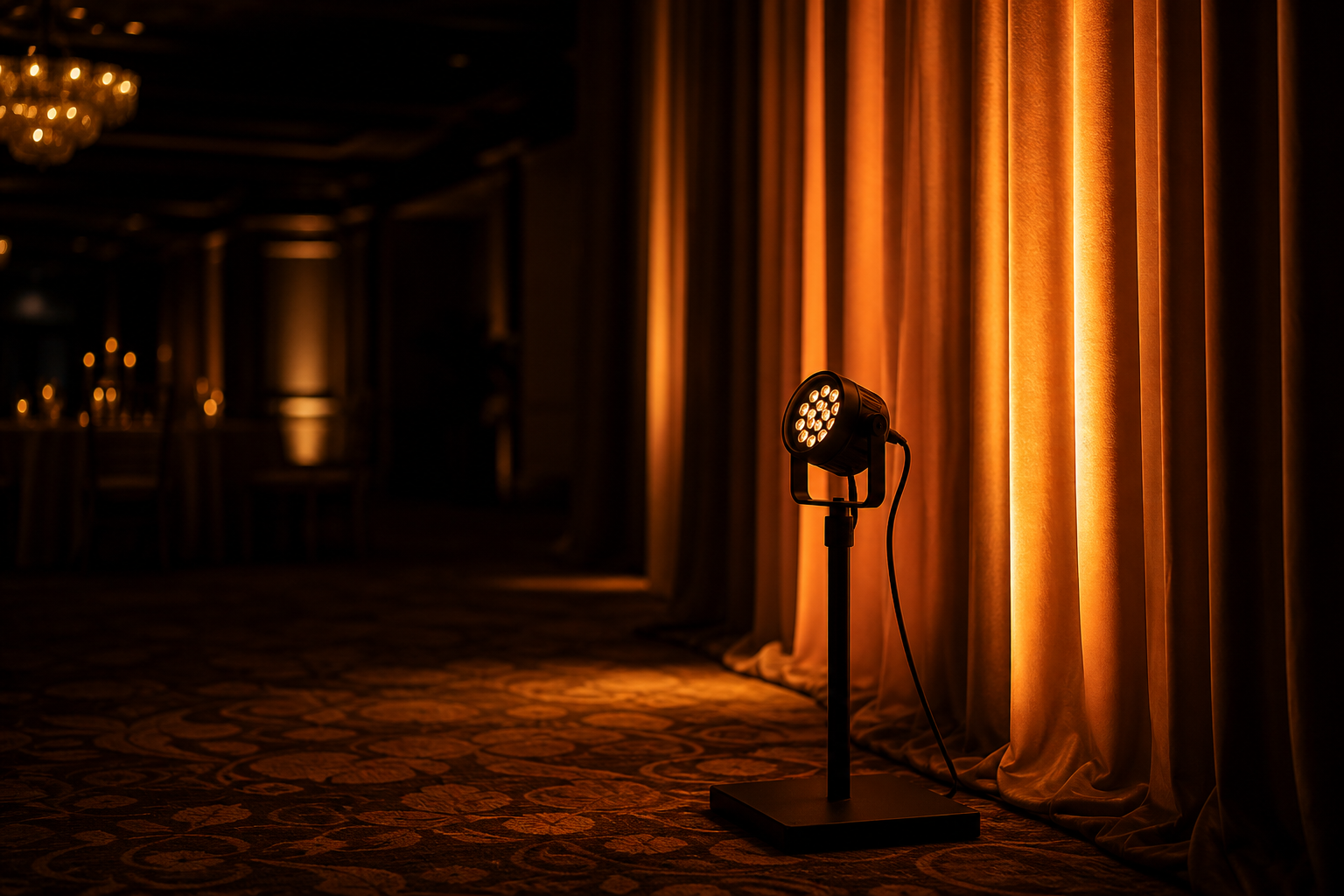
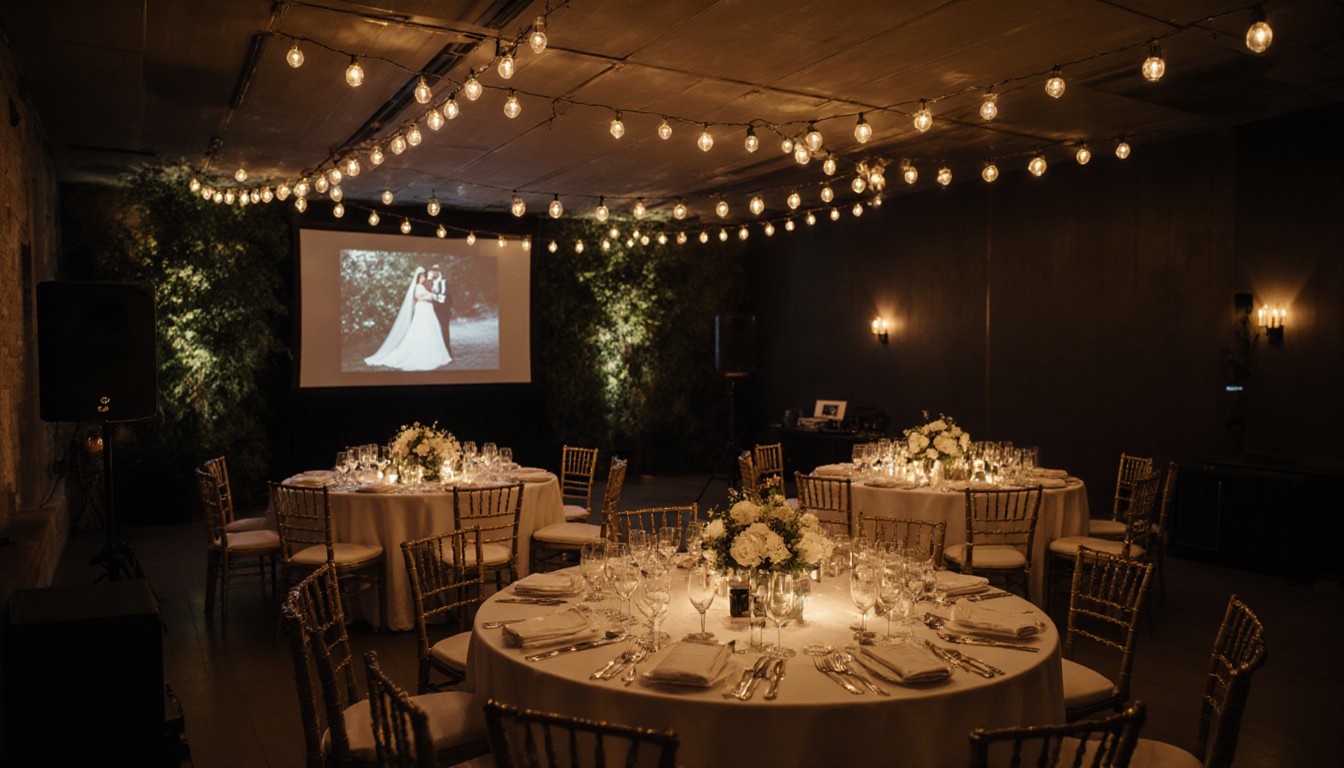
Lighting is where events go from "functional" to "wow." It's not just about seeing—it's about feeling. The right lighting makes a ballroom feel intimate, a tent feel magical, and a corporate stage feel like a TED Talk. Don't skip this.
Why Professional Lighting Is Essential:
- Atmosphere Creation: Sets the mood and tone for your event
- Visual Enhancement: Makes spaces more attractive and engaging
- Focus Direction: Guides attention to key areas or speakers
- Photography Support: Ensures great photos and videos
Essential Lighting Types:
- Uplighting: Enhances architectural features and creates ambiance
- Spotlights: Highlights speakers, performers, or key areas
- Wash Lights: Provides even, general illumination
- Accent Lighting: Creates visual interest and depth
- String Lights: Adds warmth and charm to any space
Professional Lighting Features:
- Color-changing capabilities (RGB or RGBA)
- DMX control for synchronized effects
- Dimmable and programmable settings
- Energy-efficient LED technology
- Easy setup and breakdown

4. Video Display System
If you're showing slides, videos, or live content, you need a screen people can actually see. Not a projector that washes out in daylight. Not a monitor that's too small for the room. A real, professional display that does the job.
Why Video Displays Are Crucial:
- Content Visibility: Ensures all guests can see presentations and content
- Engagement: Visual content keeps audiences engaged and interested
- Information Sharing: Displays schedules, directions, and important information
- Branding: Reinforces your brand and event theme
Display Options:
- LED Walls: Large, bright displays for major presentations
- Projectors: Cost-effective for temporary installations
- Flat Panel Displays: Professional appearance for permanent installations
- Video Walls: Multiple displays for large venues
Professional Considerations:
- Appropriate size for viewing distance
- High resolution for clear, crisp images
- Brightness suitable for ambient lighting
- Reliable connectivity and signal distribution
- Backup systems for critical presentations
5. Professional Cabling and Infrastructure
Nobody notices good cabling. But everyone notices bad cabling—tripping hazards, signal dropouts, that one cable that won't reach. We tape down every cable, label everything, and run backups. It's not glamorous, but it's the difference between pros and amateurs.
Why Professional Cabling Matters:
- Signal Quality: Maintains audio and video signal integrity
- Reliability: Reduces the risk of technical failures
- Flexibility: Allows for easy reconfiguration and expansion
- Safety: Meets electrical and fire safety standards
Essential Cabling Components:
- Audio Cables: XLR, TRS, and speaker cables for audio connections
- Video Cables: HDMI, SDI, and VGA for video distribution
- Network Cables: Ethernet for digital audio and control systems
- Power Distribution: Reliable power for all equipment
- Cable Management: Tidy, organized cable runs
Professional Standards:
- High-quality, shielded cables
- Proper cable lengths and routing
- Labeled and color-coded connections
- Backup cables for critical connections
- Professional installation and testing
Additional Considerations for Professional Events
Backup Systems:
Always have backup equipment for critical components. This includes spare microphones, backup audio systems, and redundant power sources. Professional AV companies should provide redundancy as standard practice.
Technical Support:
Having qualified technicians on-site during your event ensures that any technical issues are resolved quickly and professionally. This peace of mind is invaluable for event success.
Equipment Quality:
Invest in professional-grade equipment rather than consumer alternatives. Professional equipment is designed for reliability, durability, and performance in demanding event environments.
Budget Considerations
Essential vs. Nice-to-Have:
Focus your budget on these five essential items first. Once you have solid foundations, you can add specialized equipment based on your specific event needs.
Rental vs. Purchase:
For occasional events, renting professional equipment often provides better value than purchasing. You get access to the latest technology without the maintenance and storage costs.
Professional Installation:
Proper installation and setup are as important as the equipment itself. Professional installation ensures optimal performance and reduces the risk of technical issues during your event.
The Bottom Line
These five items aren't optional. They're the foundation. Get them right, and everything else falls into place. Cut corners here, and no amount of fancy extras will save your event.
The secret isn't just having the gear—it's knowing how to use it. That's where experience matters. We've run these systems hundreds of times. We know what works, what fails, and how to fix problems before they become disasters.
At Equinox, these five essentials are just the starting point. We bring the gear, the crew, and the craft that turns a technical setup into a flawless experience. Clean cables, tested systems, and a team that shows up ready—that's what we do.
Ready to Equip Your Next Event with Professional AV?
Ready to bring professional production to your next event? Let's talk about what you actually need.
Get Your Professional AV Quote